
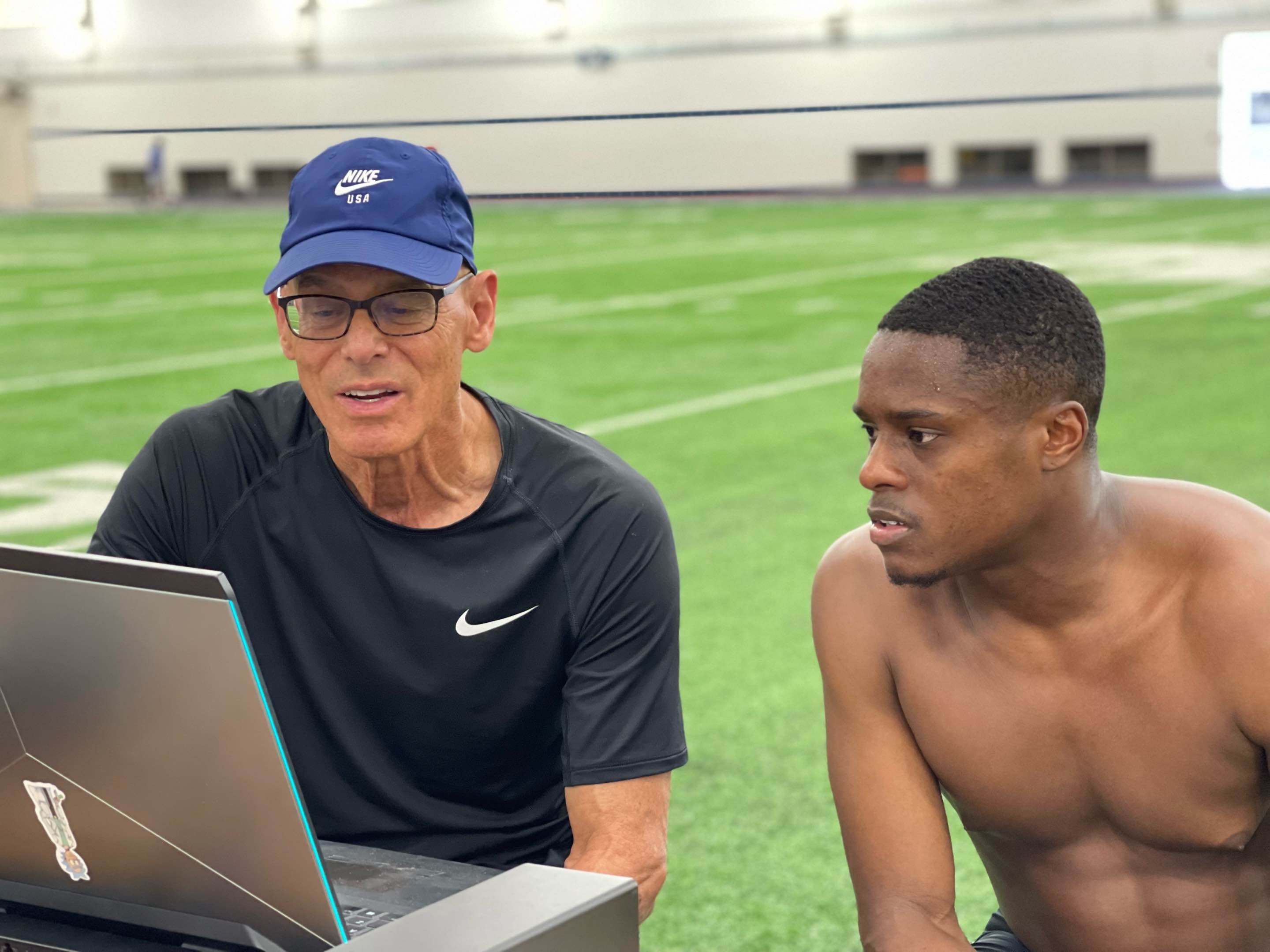
Dr. Ralph Mann
Dr. Ralph Mann helped shape the scientific understanding of sprinting and hurdling through decades of research, technical innovation, and applied analysis. CompuSport continues to draw on that foundation.
What made his approach to sprint research distinctive?
Mann combined experience as an elite hurdler with doctoral training in exercise science. He understood both the demands athletes experience and the need to test ideas against measurable evidence. His research examined how high-performing athletes organize their movements and how differences in mechanics relate to performance outcomes. That combination of athletic insight and scientific discipline remains influential.
A major part of his contribution involved computer-based movement analysis and biomechanical modeling. These methods allowed complex sprint actions to be broken into interpretable variables and compared systematically. The resulting work offered coaches a richer vocabulary for discussing stride mechanics, body positions, and other characteristics of sprint performance.
His work brought quantitative attention to movements that coaches had often described primarily through observation. That shift — from impression to measurement — is the thread that runs through everything CompuSport does today.

1×
Olympic Silver
400m hurdles, Munich 1972
40+
Years of research
Sprint and hurdle biomechanics
USATF
National program
Biomechanics research partner
2
Foundational books
The Science of Speed · The Mechanics of Sprinting and Hurdling
How does his research inform CompuSport's work today?
Quantifying sprint mechanics
Mann developed methods for measuring the kinematic variables that govern sprint performance — ground contact time, stride length, joint angles at key phases — and comparing them systematically across athletes and performance levels.
Computer-based movement analysis
His use of proprietary software and biomechanical modeling allowed complex sprint actions to be broken into interpretable components at a time when such tools were not widely available in applied sport settings.
Elite athlete benchmarks
Decades of data collected with Olympic and world-class sprinters through USATF produced the benchmark comparisons that CompuSport uses to contextualize individual athlete assessments today.
Applied coaching vocabulary
The practical output of his research was a richer, more precise language for discussing sprint mechanics — one that coaches could use without requiring laboratory access or advanced technical training.
What does it mean to carry this research forward responsibly?
The most meaningful way to honor scientific work is to use it carefully. CompuSport applies the principles of measurement, comparison, and interpretation while recognizing that every athlete and training context is different. Readers, coaches, and researchers interested in this legacy can explore the books, educational resources, and consulting work that carry these ideas forward.
Dr. Amber Murphy worked alongside Mann for more than two decades and has continued to communicate and apply their shared research. Every engagement begins with clearly defined expectations — the purpose of the work, the information available, and the limitations that matter for interpretation. Clients should know what the findings can support, which conclusions remain uncertain, and what an appropriate follow-up might involve.
We encourage clients to treat an assessment or consultation as part of a continuing process of learning. Results can guide new questions, inform future testing, and support communication among athletes and professionals. Follow-up work can be considered when the original findings justify it.
How does CompuSport continue his work?
Dr. Amber Murphy worked alongside Mann for more than two decades, applying his research to real athletes and real coaching problems. CompuSport is the direct continuation of that collaboration — making the same level of analysis available to athletes, coaches, and organizations that don't have access to a national federation's resources.
About CompuSport
The written record of the research
The Science of Speed and The New Mechanics of Sprinting and Hurdling bring a broad selection of concepts to readers seeking practical understanding. Together they represent the most complete written record of Mann's research — covering sprint mechanics, injury prevention, talent identification, and coaching applications across track and field, team sports, and winter sports.
Explore the BooksResearch
Selected Publications


Ready to explore his research in practice?
The next step is a conversation about the specific athletes, questions, and resources involved. CompuSport can help prioritize a manageable starting point — whether that is a video review, a planning discussion, an on-site session, or a longer-term collaboration.